
Since birth, we’ve been indoctrinated with a love of horror, whether we knew it or not. The first game your mother would play with you involved her hiding behind her hands and then shouting, “Boo!” We would get taught folk tales that involved a witch wanting to eat children or a wolf wearing the skin of an elderly woman. Some of us were warned of the Krampus, who’d kidnap misbehaving little boys and girls. We’d play Bloody Mary and watch old Disney films. You know, the scary ones. It was a lifetime of preparation for horror. Because deep down, we all have an innate desire to be frightened. We crave it and these characters scare us better than any others. Since this list encompasses the entire history of horror, every genre (and subgenre) is represented. Everything from creature features to kinder trauma, action movies to horror comedies are eligible. I combined characters if they worked as a duo or a group and I excluded animals (save for one) unless they were supernaturally possessed or if they had an internal monologue so that we could understand their motivations. I also only included characters from thrillers if they targeted children. This list is a celebration of horror and the icons that help us lose sleep at night.
These are the 500 Greatest Horror Characters of All Time.

200. Zuni Doll | Trilogy of Terror (1975)
I have a strong affinity for horror anthology films. Whether there’s a connecting story to somehow bridge the segments together or if they just play one after the other, there’s something about the structure that really appeals to me. Trilogy of Terror is unique in that it has the same actress in every segment but playing a different role each time. The actress is Karen Black and she kills it in this film. The film kind of feels like a passion project for her considering she helped write parts of it and even came up with the iconic ending.
The first story is about a student blackmailing his teacher (Black) into basically being his slave and it turns out, he may not be in complete control of the situation. The second story involves two sisters one of whom is trying to kill the other with voodoo. The third and final story involves the iconic Zuni Doll. The doll is a small, carved wooden figure resembling a warrior, adorned with traditional tribal attire. It stands about a foot tall and features a painted face with exaggerated features, giving it an unsettling appearance. It also comes with a razor sharp spear it uses to viciously attack Black. The segment holds up remarkably well and was actually the inspiration for Child’s Play. All in all, the anthology, like most anthologies, is a mixed bag. The first two stories are okay, nothing special, but the last one is easily one of the best horror segments in any anthology.

199. Red Miller (Nicolas Cage) | Mandy (2018)
Thank God for Tombstone because if it wasn’t for the royalties of that, Panos Cosmatos, son of that film’s director George P. Cosmatos, would never have been able to make Beyond the Black Rainbow. And if he never made that, Mandy wouldn’t exist. And I don’t want to live in a universe where Mandy doesn’t exist. At the start of the film, Red lives a peaceful, reclusive life with his girlfriend, Mandy Bloom (Andrea Riseborough), in a remote forest. Their relationship is tender and serene, and Red clearly adores Mandy, living contently by her side. They eat Cheddar Goblin brand mac ‘n cheese while watching cheesy Don Dohler films. It’s a simple life. This peace is shattered when a sadistic, drug-fueled cult led by the deranged Jeremiah Sand (Linus Roache) kidnaps Mandy and brutally murders her in front of Red.
This traumatic event propels him into a nightmarish, blood-soaked quest for vengeance. Red’s arc is simple yet profound: driven by loss, he descends into primal violence. His transformation throughout the film from a quiet, loving man into an unstoppable force of vengeance is both cathartic and horrifying. As he confronts the bizarre, almost otherworldly cult members and their demonic biker enforcers, Red taps into his raw, unrelenting fury. Fury that only Cage can deliver. I don’t know which film popularized his unique brand of over the top emotion coined “Cage Rage” but few films utilize it as well. Red Miller is one of his most intense and emotionally raw performances. The film’s deliberate pacing allows Cage to showcase a wide range of emotions—grief, madness, rage, and, finally, grim satisfaction. In short, it’s the ultimate Cage performance.
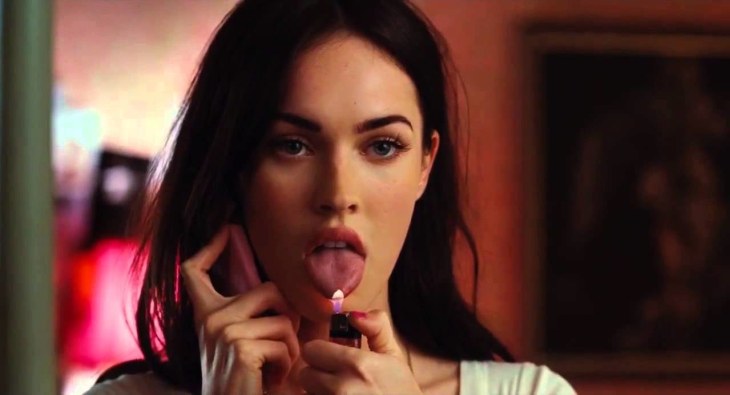
198. Jennifer (Megan Fox) | Jennifer’s Body (2009)
Teenage girls can be scary enough with their tweetgrams and snapfaces, but nothing is worse than a wild child teen who ends up being taken over by a demon. Jennifer is a high school cheerleader known for her beauty and charisma. She is the quintessential popular girl—confident, attractive, and seemingly in control of her life. After a rock band named Low Shoulder comes to town, Jennifer attends their concert with her best friend Needy (Amanda Seyfried). In a shocking turn of events, Jennifer is sacrificed by the band in a botched attempt to gain fame, which results in her becoming possessed by a demon.
Following her transformation, she develops a hunger for human flesh, particularly targeting her male classmates. Jennifer’s character can be interpreted as a critique of societal norms surrounding female sexuality. After her transformation, she embraces her newfound power, defying traditional expectations of femininity. The film explores the idea that women can possess both beauty and danger, challenging the archetype of the passive female character often seen in horror films. It’s also about how ugly female friendships can turn, especially in high school. The film juggles many themes and has a devilish sense of humor but the glue that holds the entire thing together is Megan Fox’s performance. She’s clearly having the time of her life being the worst person imaginable.

197. Justine (Garance Marillier) | Raw (2016)
A twist on the coming-of-age movie, Raw is like Ginger Snaps but with cannibalism instead of werewolf-ism. After a hazing incident goes wrong, college student Justine (Garance Marillier) slowly develops an insatiable hunger for human flesh. While the plot synopsis would make it seem more like a horror film, it’s a bit more than that. There are horrible and shocking things in it (the film does not shy away from the gruesome) but it has more on its mind than just shock value. It tackles topics such as: the uncertainty of self, dark family legacies, fear of female sexuality and possibly homosexuality. The cannibalism can be a stand in for any number of issues. Or it could just be a clever take on the zombie genre. It’s a film that refuses to be categorized with an unforgettable central performance by Garance Marillier.

196. Mia (Jane Levy) | Evil Dead (2013)
Despite never receiving the same love or critical appreciation as other remakes such as The Thing, The Fly and Invasion of the Body Snatchers, The Evil Dead nevertheless holds its own against the best examples of remakes as good or better than their original counterparts. For most, Sam Raimi’s masterpieces were untouchable and revered classics. I was in that camp until I saw Fede Alvarez’s version. Like most good remakes, he was able to take the core elements of its predecessor and tell the story in his unique way. Where Raimi utilized an almost slapstick take to compliment the mayhem, Alvarez fueled it with pure terror, sick effects (practical and CGI), and a sympathetic final girl smack dab in the middle of it all.
Usually, gender-swapping isn’t effective but seeing how Bruce Campbell’s Ash was essentially a final girl in a male’s body, it works perfectly here. The third act is an exhaustive descent into bloody carnage that offers up what all horror fiends crave in an intense and satisfying execution of being frightening, unsettling, and gory. At the center of things is Mia, a hopeless drug addict who needs her friends to help her kick her addiction, but by the end, she is a chainsaw-wielding badass standing alone. During the chaos and death, she was able to find an inner power that gives us a satisfying transformation from helpless to the savior of the world. She even ends up ripping her own arm off in order to survive before taking down an ultimate evil that would have ruled the world. Character arcs don’t get much better than that.
—Vincent Kane

195. Ed (Patrick Wilson) and Lorraine Warren (Vera Farmiga) | The Conjuring Universe
Even though the real Ed and Lorraine Warren are garbage hucksters and frauds that do not deserve to be canonized, their cinematic counterparts are so fictionalized, they might as well be different characters altogether. Google what the real Ed looked like and then tell me they were striving for accuracy. The filmmakers only wanted their names because the cases they were attached to are some of the most well known in paranormal investigation history. The Conjuring films are inspired by the Warrens’ most famous real-life cases, although the films take creative liberties for cinematic purposes. The couple is often called upon by families dealing with paranormal disturbances, and their investigations range from demonic possessions to haunted houses and cursed objects. Like in real life, their cases are nowhere near as interesting as the couple themselves.
The films throw jump scares at you in such a rapid succession, that it feels like they’re trying to pelt you to death with spooks. As much as I appreciate a cinematic haunted house, I’m actually more invested in Patrick Wilson and Vera Farmiga’s story playing out in the fringes of the narrative. Their performances are the emotional backbone of the Conjuring Universe. Their portrayal of the Warrens presents them not just as ghost hunters but as a deeply loving couple whose belief in each other and their faith helps them confront unimaginable horrors. Their chemistry is natural and affectionate, which lends credibility to their characters’ long-standing marriage and deep emotional connection. While I despise the real people they’re based on, I can’t help but to love their onscreen dynamic. they are what the kids say “relationship goals.”

194. Lola “Princess” Stone (Robin McLeavy) | The Loved Ones (2009)
Oh, Lola. She doesn’t handle rejection all that well. Like your stereotypical teenage girl, she crushes hard on the cute boy toys of her school. Unlike your typical teenage girl though, her idea of crushing on a guy is by kidnapping them and inflicting a big heaping pile of torture upon them until they fall in love with them. Lola is a seemingly sweet and innocent teenage girl who harbors a dark and violent side. She becomes fixated on her classmate Brent (Xavier Samuel) after he rejects her invitation to the prom, leading her to orchestrate a terrifying and brutal revenge.
Heartbroken and enraged by the rejection, she decides to take matters into her own hands. Lola, along with her sadistic father, kidnaps Brent and brings him to her home, which has been transformed into a twisted prom setting. What follows is a horrific and sadistic game that Lola plays with Brent, where she tortures him both physically and psychologically. Lola embodies the extremes of obsession, demonstrating how love can warp into something monstrous.
—Vincent Kane

193. The Park Family (Various) | The Host (2006)
The Park Family is an interesting inclusion for a list like this but The Host isn’t your typical monster movie either. While the film is about a monstrous creature emerging from the Han River in Seoul and kidnapping the youngest member of the Parks, it is ultimately a story about family, survival, and social commentary. The Parks are an ordinary, dysfunctional family caught in extraordinary circumstances, and their fight to save one of their own drives the plot forward.
Park Gang-du (Song Kang-ho) is the film’s main protagonist, a slacker and single father who works at his father’s food stand near the Han River. He is portrayed as somewhat slow-witted and immature, often falling asleep at work or making careless mistakes. Despite his flaws, Gang-du’s love for his daughter is undeniable, and his determination to save her from the creature reveals the depth of his character. His character arc is central to the film, as he evolves from an inept father into a driven hero.
Park Nam-joo (Bae Doona) is Gang-du’s younger sister, a professional archer. She is quiet, reserved, and methodical, often underestimated by others but possessing a quiet strength. Her archery skills play a crucial role in the family’s attempts to rescue Gang-du’s daughter. Nam-joo’s character embodies resilience, and her understated bravery contrasts with the more frantic personalities in her family.
Park Hie-bong (Byun Hee-bong) is the patriarch of the Park family, a hardworking and loving father who runs a small snack stand by the Han River. He is the glue that holds the family together, providing wisdom and leadership when the rest of the family falters. His deep love for his grandchildren, especially Hyun-seo, motivates him to lead the charge in finding her. His sense of duty and sacrifice for his family becomes a major emotional anchor in the film.
Park Nam-il (Park Hae-il) is the younger brother of Gang-du and is a former activist who has grown disillusioned and cynical. He is intelligent but angry and bitter about his life’s direction. Nam-il’s character adds another layer of tension to the family dynamic, as he is often at odds with Gang-du and the rest of the family. Despite his skepticism and self-centered attitude, he eventually takes on a crucial role in the rescue mission, showcasing his resourcefulness and care for his family when it matters most.
The Park family is dysfunctional and filled with tension, but their love for each other is undeniable. The film explores how, despite their differences and individual flaws, they come together in the face of a crisis. The family’s interactions are often humorous, highlighting Bong Joon-ho’s ability to blend genres, but they also carry an underlying emotional weight. Each member of the Park family has a unique personality and role to play, and their collective efforts demonstrate the power of familial love and unity.

192. Doctor Julian Karswell (Niall MacGinnis) | Curse of the Demon (1957)
Curse of the Demon (Night of the Demon in the US) is a story about the battle between skepticism and belief. Our nominal hero, John Holden (Dana Andrews) is determined to prove that professed black magician Karswell is a phony. Karswell is just as determined to prove him wrong, and curses Holden to die in three days as gambit to change the man’s mind.
MacGinnis’ Karswell is actually my favorite character in the film, because he’s such a baby. He’s a man who’s used magic to gain exceptional wealth and power, but he’s also incredibly petulant and reactive when things don’t go his way. He goes from childish glee at performing magic for children to another, pettier sort of glee at conjuring up the windstorm that ruins the same party. He’s alternatingly didactic, annoyed, magnanimous, scared and arrogant. In other words, he’s interesting – and as much as Holden is cast in the 50’s science hero mold and heroine Joanna (Peggy Cummins) is a strong, educated scientific mind in her own right, they’re kind of flat in comparison. I like them – and I like Holden’s scientific colleagues even more – but Karswell is just more complicated. Hell, Holden’s smug arrogance for much of the film annoyed me almost as much as it did Karswell.
—Bob Cram

191. Belial | Basket Case (1982)
Basket Case is a cheap movie and Belial is a pretty crappy special effect muppet, a latex monster with very little in the way of mobility, expression or realism in any way. And yet this stupid thing, this lump of not-flesh, is also weirdly effective. He can be terrifying, all teeth, black eyes and horrific screech, and he can be tender or pathetic. I dunno – he shouldn’t work at all, you should laugh every time you see him (and some of the stop motion bits ARE laughable), but again there’s a certain, ephemeral something about the design that just works. I think it’s down to director Frank Henenlotter and his love for his subjects, as damaged, broken and just plain awful as they may be. Do I want to meet Belial in a dark alley (or doctor’s office)? No, but somehow I can sympathize with this lumpy murder-muppet.
—Bob Cram

190. Cesare (Conrad Veidt) | The Cabinet of Dr. Caligari (1920)
Cesare is introduced as a sleepwalker, or somnambulist, who has been kept in a trance-like state by Dr. Caligari. Caligari exhibits Cesare as part of a carnival sideshow, claiming that he can predict the future. The film’s protagonist, Francis, becomes suspicious when a series of murders occur, seemingly connected to Dr. Caligari and Cesare. His pale, gaunt appearance and robotic movements, combined with Veidt’s intense, hollow-eyed performance, make him an unnerving looking sleepwalking murder zombie. He is both a victim of Dr. Caligari’s control and a source of terror, embodying the film’s themes of manipulation and madness.
While Cesare is the instrument of murder, he is not inherently evil. His actions are the result of Dr. Caligari’s control, and this positions him as a tragic figure—a man who is both victim and villain. This duality is key to understanding the character’s depth and the horror of his situation. The character has had an undeniable lasting influence on horror cinema. The somnambulist archetype, the idea of a mind-controlled, sleepwalking killer, has inspired numerous films and characters throughout cinematic history. Veidt’s portrayal of Cesare also helped solidify his status as a legendary figure in silent cinema and as one of the first horror icons.

189. David Collins (Dan Stevens) | The Guest (2014)
Usually when an actor leaves a hit show to make it in Hollywood, it backfires horribly, killing their career. It’s called “pulling a Caruso” and very few have ever successfully made the jump. Dan Stevens leaving Downton Abbey at the height of its popularity, is crazy all by itself but the fact that he left it to be in some weird ass horror/action film is amongst the craziest career moves any actor has ever made. But goddamn did that gamble ever pay off. Heavily inspired by the work of Carpenter, The Guest is Halloween if Michael Myers was replaced with Captain America. Stevens plays a soldier who weasels his way into the life of the family of his deceased old war buddy. Or so he says. What he wants from them or why he’s fucking with them is never made explicitly clear but none of that matters. The film is not concerned with answers or even questions. All it cares about is delivering a rock’n good time as stylish as possible, which it delivers on and then some.

188. Sergeant Howie (Edward Woodward) | The Wicker Man (1973)
Let’s not mince words here, Sergeant Neil Howie is a square. He spends the entire movie aghast at the rampant nudity and weird orgies going on at the isolated island of Summerisle, which arrives at to investigate the reported disappearance of a young girl. I mean, he turns down Britt Ekland for chrissakes. He is a perennial stick in the mud and is honestly one of the least likeable protagonists in film. So why is he this high? Because of what he represents. The Wicker Man is a disturbing and atmospheric film about the clash between Christian faith and paganism. It’s a battle of whose belief in their God is stronger and even though he never strays from his strict religious values, he ultimately loses.
In every other film about religion, the power of God is the blue turtle shell from Mario Kart, the literal deus ex machina that wins the day. But in the universe of The Wicker Man, he’s impotent. Or worse, he doesn’t exist at all. This culminates in one of the most shocking and memorable endings in horror cinema. Howie is not a traditional hero, but rather a man whose unyielding faith and self-righteousness blind him to the true nature of the threat he faces. This makes the character’s ultimate fate both tragic and ironic, as his piety and certitude lead him straight into the hands of those he seeks to stop.

187. Hayley Stark (Elliot Page) | Hard Candy (2005)
Hayley Stark is a seemingly innocent and youthful girl who engages in an online relationship with a much older man, Jeff (Patrick Wilson). Initially, she appears to be a naive teenager, but as the plot unfolds, her true nature and intentions become increasingly complex and unsettling. The story begins with Hayley meeting Jeff, a photographer, in a coffee shop. Their interaction is flirtatious, and Hayley’s demeanor suggests a level of maturity beyond her years. After some initial back-and-forth, they return to Jeff’s home, where the situation takes a dark turn.
Once at his house, Hayley reveals her true motives. She confronts Jeff about his questionable behavior and the possibility that he may be a sexual predator. It becomes clear that she has been meticulously planning this encounter and has taken control of the situation. The film shifts dramatically from what initially seemed like a teenage romance to a tense psychological confrontation. Her actions throughout the film raise questions about morality: is her revenge justified, or does she cross ethical boundaries in her quest for justice? These questions force the audience to grapple with their own feelings about retribution and the complexities of crime and punishment. Hard Candy is a morally complex thriller that was a perfect showcase of Page’s talents.

186. The Puppets | Puppet Master (Franchise)
I generally don’t find puppets (or dolls or mannequins) very scary or even interesting, but the title creatures of Puppet Master have a lot of personality, and they manage to fall out of the dead zone in my head – a kind of anti-uncanny valley – and into being monsters that I can enjoy. As mediocre (or worse) as the installments in the Puppet Master series can be (I only enjoy a handful myself), the puppets are almost always worth a look. I still have a fondness for the originals – Blade, Leech Woman, Jester, Tunneler and (my personal favorite) Pinhead. Torch, from Puppet Master II, is also memorable, as is Six-Shooter from Puppet Master III: Toulon’s Revenge. I know there’s a plot and a (messy) mythology that goes with these murderous muppets, but I honestly don’t care. Give me some fun scenes of puppets going on a murder spree and I’m happy to tune in.
—Bob Cram

185. Aaron (Mark Duplass) | Creep (Franchise)
In the first film, Aaron (initially known as Josef, though we later learn that this is likely a pseudonym) hires a videographer named Aaron (Patrick Brice) under the guise of documenting his life for a video diary. As the film progresses, Josef’s behavior becomes increasingly bizarre and erratic, eventually revealing his true, violent nature. What makes Aaron (Duplass) so disturbing in Creep is his ability to switch between awkward charm and unsettling menace. He is seemingly open, friendly, and almost pitiful at times, but underneath, he exudes a constant sense of danger. His unpredictability is what drives the horror, as you can never fully trust his motivations or predict his next move.
In the sequel, Aaron (now going by his real name) is revealed to have killed multiple people over the years, yet he is struggling with boredom and dissatisfaction with his life as a serial killer. He once again hires a videographer, this time Sara (Desiree Akhavan), who is documenting strange individuals for her web series. Unlike his previous victims, Sara is intrigued by Aaron and refuses to be intimidated by him, creating a dynamic that is both tense and strangely comedic.
Aaron’s character in Creep 2 is further developed, as we see more of his internal struggles. He becomes almost self-aware, reflecting on his own nature as a killer and his need for connection and validation. His interactions with Sara challenge his usual dominance over his victims, making him more vulnerable but no less dangerous. Duplass brings a deeper sense of complexity to Aaron in this sequel, portraying him as someone craving both recognition and understanding, while still retaining his eerie unpredictability. They just announced a sequel television series and I hope we continue to see an evolution of the character and more Peachfuzz.

184. Jerry Dandrige (Chris Sarandon / Colin Farrell) | Fright Night (Franchise)
In the 1985 original, Jerry Dandrige is a sophisticated and seductive vampire with a menacing presence hidden under a charming demeanor. Sarandon’s Jerry is both terrifying and charismatic, effortlessly drawing in his victims, while also maintaining a sense of old-world elegance. His portrayal gives Jerry an almost tragic loneliness, making him a more nuanced villain.
In the 2011 remake, Colin Farrell’s Jerry Dandrige is more primal and predatory compared to Sarandon’s portrayal. Farrell brings a darker, more dangerous energy to the role. While he still retains the charm necessary to lure his victims, his version of Jerry is more brutal and unapologetic, leaning heavily into his monstrous side. The remake itself modernizes the story, and Farrell’s take on Jerry fits this tone, delivering a performance that feels more like a predator hiding in plain sight.
Which version you prefer comes down to your preference in vampires. If you’re a fan of old-school Dracula type vampires, you’ll most likely lean towards Sarandon but if you like your vampires to feel like animals pretending to be humans just to get close to their victims, Farrell is your guy. Either way, both interpretations of the character are great for their film’s respected tones.

183. Derek (Peter Jackson) | Bad Taste (1987)
Bad Taste is the story of four men from a government agency trying to deal with an alien invasion of a small New Zealand town (Kaihoro – which is apparently a food pun in Maori). Director Peter Jackson plays Derek, part of the advance team. Derek is ridiculous, but he’s my favorite character in the film. He’s bloodthirsty (his interrogation methods include pounding a bayonet into a guy’s heel while hanging him upside down off a cliff), clumsy, funny and a little too full of himself. He spends a good portion of the film on his own, but Jackson manages it. He’s got a good sense of physical comedy that comes in handy when Derek is dealing with a flap of skull that keeps allowing pieces of brain to fall out (a result of a fall of that cliff). Even today when faced with some situation I don’t want to face I’ll pull myself up straight and intone, “I’m a Derek. And Dereks don’t run.” Nobody laughs but me, but that’s okay.
—Bob Cram

182. Alice Johnson (Lisa Wilcox) | A Nightmare on Elm Street 4: The Dream Master (1988) and A Nightmare on Elm Street 5: The Dream Child (1989)
Alice Johnson is a shy and introverted teenager who initially struggles with self-confidence. She is friends with a group of characters who are being targeted by the infamous Freddy Krueger. As the story unfolds, Alice becomes increasingly central to the plot as she learns to harness her dreams to confront Freddy and protect her friends. In The Dream Master, Alice’s character undergoes significant growth. At the beginning of the film, she is depicted as timid and passive, often overshadowed by her more outgoing friends. However, as the movie progresses and her friends fall victim to Freddy, Alice discovers her unique ability to manipulate her dreams. This newfound power symbolizes her journey from victimhood to empowerment.
By the film’s climax, she becomes a formidable adversary to Freddy, using her dream powers to confront him directly. Alice returns in the sequel as a more mature character, now dealing with the complexities of motherhood and the responsibility of protecting her unborn child. This film deepens Alice’s character by exploring themes of sacrifice and the struggles of parenthood. She becomes a protective figure not only for herself but for her child, who is also threatened by Freddy. The fact that she went up against one of horror’s strongest monsters and defeated him twice, easily puts Alice in the upper echelon of final girls.

181. Vladislav (Jemaine Clement), Viago (Taika Waititi), and Deacon (Jonny Brugh) | What We Do in the Shadows (2014)
The Office meets Interview with a Vampire but with better acting and less melodrama, What We Do in the Shadows takes us on a behind-the-scenes documentary-style look at the daily routine of a group of vampires. We see the vampires, ranging from 183 to 8,000 years old, squabble over daily chores, picking on local werewolves, cruising for ladies and struggling with new technology. WWDITS is a fresh take on the vampire sub-genre that turns out some good laughs. Even though writer/directors Taika Waititi and Jemaine Clement poke fun at vampires, you can tell there is a lot of respect and love here for the bloodsuckers. It is one of those films that even non-horror nuts can enjoy and gain a new perspective on the genre. The television spin-off has eclipsed the movie in popularity (people can’t get enough of Colin Robinson) but it also wouldn’t exist without this film to build off of. Those characters are great because they’re drawing from these lovable undead fools.

180. Billy (Albert J. Dunk) | Black Christmas (1974)
One of the criteria for making the list was for a character to have a corporeal state, which is why the house from Amityville Horror or the Umbrella Corporation from the Resident Evil series didn’t make the cut. That meant that only ghosts we could actually see were eligible, which makes Billy the closest character to break this rule. For all intents and purposes, Billy is a disembodied voice that kills in POV but there is one shot of his eye which makes him eligible. Even if that shit didn’t exist, I still would’ve broken the rules for him because there are few characters more enigmatic or terrifying. His presence is felt throughout the film through disturbing phone calls, erratic behavior, and his silhouette.
His voice on the phone is a chilling mix of screams, whispers, and bizarre, incoherent ramblings, which creates an atmosphere of psychological terror. The content of his calls suggests a deep well of trauma and mental instability, although the film never provides a clear backstory, leaving much of Billy’s motivations and past up to interpretation. This ambiguity heightens the tension and makes him an unpredictable and terrifying force. Unlike many slasher villains who became almost supernatural in their endurance, Billy in Black Christmas remains frighteningly human.
His erratic nature, violent outbursts, and voyeuristic behavior make him seem unstable and all the more dangerous because of it. The film’s decision to never fully explain or show Billy in detail leaves a lasting impression, as the unknown aspects of his character fuel the audience’s imagination, making him even scarier. It could be argued that without Billy, there would be no Michael Myers or Jason Voorhees.

179. Fool (Brandon Quintin Adams) | The People Under the Stairs (1991)
In many ways, The People Under the Stairs is one of the most transgressive and progressive horror satires ever made. In addition its biting social commentary that’s still ahead of its time, it also includes radical depictions of BDSM and has one of the few examples of a young black kid as its lead. Fool (real name Poindexter Williams) is a young boy living in the ghettos of Los Angeles and his journey begins when he, along with two adults (Leroy and Spencer), attempts to rob the mansion of his family’s oppressive landlords. However, things quickly take a dark turn when they discover that the house is a maze of horrors. The owners—referred to as “Mommy” and “Daddy”—are deranged and violent, with a history of imprisoning children who disobey them. Fool soon uncovers the secret of the children locked in the house’s basement, known as “The People Under the Stairs.”
Despite his young age, Fool displays immense courage and wit. As he navigates the mansion’s traps and dangers, his character represents the underdog fighting against systemic abuse, as the landlords serve as a metaphor for the exploitation of marginalized communities. Fool’s moral compass and resourcefulness help him survive the house’s many dangers and ultimately lead to the liberation of both the children imprisoned within and his community outside. In a genre filled with the exact same heroes and villains, The People Under The Stairs dared to do something radically different and the gamble paid off. There’s no other horror lead like Fool.

178. Frank (Sean Chapman), Julia (Clare Higgins) and Larry Cotton (Andrew Robinson) | Hellraiser (1987) & Hellbound: Hellraiser 2 (1988)
According to the trivia on IMDb, the film was originally supposed to be called “The Hellbound Heart,” after the novella upon which it was based. The studio decided the title sounded too much like a romance and asked Clive Barker to change it. Barker offered “Sadomasochists from Beyond the Grave,” which was rejected for the overtly sexual content. He ultimately opened the floor to the production team to offer up their own suggestions, prompting a 60-year-old female crew member to offer up “What a Woman Will do for a Good Fuck.” She may have been joking but thematically, it makes more sense than the two rejected titles and the official one. Hellraiser isn’t about Pinhead and the cenobites raising hell, it’s about Frank and Julia and their incredibly weird sex lives. Everything that happens in this movie is the direct result of their insatiable kinks and fetishes. Frank fucks around with a torture cube just to experience a new thrill and Julia murders men just to help Frank come back. She’s helping him because no one can fuck her like he can. Not even her husband, his brother. They’re a match made in hell that might be scarier than the Sadomasochists from Beyond the Grave that took over the franchise.

177. Rose the Hat (Rebecca Ferguson) | Doctor Sleep (2019)
When Stephen King announced he was working on a sequel to The Shining, no one could’ve predicted that it would involve psychic vampires. When the news finally broke, everyone mocked Doctor Sleep’s plot relentlessly before it came out. And of course, they all made fools of themselves for ever doubting the master. On paper, it’s a ridiculous idea for a sequel but in execution? It’s terrifying. And that’s due to Rebecca Ferguson’s instantly iconic performance as Rose the Hat. She is the leader of a group of quasi-immortal psychic vampires known as the “True Knot,” who feed on the psychic energy (“steam”) of children with “the shining” to prolong their lives. Ferguson imbues Rose with a combination of charm and menace, making her both alluring and terrifying. Her signature style — a bohemian hat, relaxed attire, and an almost whimsical demeanor — contrasts with her predatory nature. She may be dressed like your cool aunt but in reality, she is deeply sadistic and enjoys manipulating and playing with her victims, which makes her even more unsettling. She’s a perfect foil for Danny and a worthy addition to The Shining universe.

176. Tiffany (Jennifer Tilly) | Chucky (Franchise)
Let’s talk about my girl, Tiffany Valentine, the bride of Chucky herself. Played by the one and only Jennifer Tilly, Tiffany is pure chaos wrapped in leather, glitter, and way too much eyeliner. And I fucking love her for it.
First off, Tiffany’s got style. I mean, who else could pull off that bridal gown while slashing throats and making murder look like a date night activity? She’s the perfect mix of glamorous and deadly. Like if Marilyn Monroe and Michael Myers had a beautiful, fucked up baby girl. She’s got this twisted sense of loyalty to Chucky, and despite their dysfunctional, murderous love story, she still manages to remind you that she’s her own woman. And hell, she can kill you in heels, with a smile.
But what really makes Tiffany Valentine an icon is that she gives zero fucks. She’s got a soft spot for domesticity, like baking cookies and shit with a side of homicide, but don’t mistake that for weakness. You cross her, and it’s game over. She’s fiercely independent, even when she’s killing in the name of love, and when she turns the tables on Chucky? My God. It’s the sweet, twisted revenge we didn’t know we needed.
Jennifer Tilly’s voice alone makes Tiffany unforgettable. Both seductive and terrifying, she could flirt with you or gut you with the same sentence. She’s the kind of villain we root for, because no matter how many bodies she racks up, she’s just so damn entertaining. Tiffany is a sassy, knife-wielding legend who proves that horror can be just as glamorous as it is gory. She’s a total badass, and I wouldn’t have her any other way.
—Ricky Ratt
225-201 | 175-151
What do you think of the list so far? Which characters do you hope will make the cut?
The official ScreenAge Newsletter has arrived! Subscribe to receive a semi-regular round-up of all our exclusive content, including reviews, editorials, Top 100 lists, and more! C'mon, we know you want to venture further into the Wasteland with us!
