
The New York Times just recently published its list of the best films of the 21st century and while the list itself is solid, it left out dozens of unforgettable films that have defined cinema in the past two decades—bold experiments, overlooked gems, cult classics, and masterpieces that slipped through the cracks of critical consensus. Since it was a collaboration of 500 artists working within Hollywood, only the most prestige titles made the cut, which normally would be fine if it wasn’t for the fact that they had a quarter of a century to pull from. It’s impossible to whittle 25 years down to 100 titles; there were bound to be omissions. Some were baffling, others understandable, but all left us wondering: What about the rest?
This list isn’t a rebuttal—it’s a celebration of what got missed. These are the movies that pushed boundaries, built worlds, broke hearts, or simply did something unforgettable. Some were box office flops, others award-season darlings. Some changed genres, while others created their own. All of them, in their own way, helped shape the cinematic language of the 21st century.
These are the 100 Best Movies of the 21st Century (That Didn’t Make The New York Times’ List).

60. Barb and Star Go to Vista Del Mar (2021)
I’m not a fan of Bridesmaids. I find it tonally all over the place and comedically inconsistent. One moment, you’ll have a weird incest joke that’s followed by some gross-out scene that transitions to a genuine heartfelt moment. It feels like three drastically different cooks were all in the kitchen at the same time and none of them could decide what kind of dish to prepare, so they made all three. Barb and Star Go to Vista Del Mar on the hand, knows exactly what it is at all times, which is comedic anarchy. Kristen Wiig and Annie Mumolo (who also wrote the film) play two best friends who decide to shake up their mundane lives by going to Vista Del Mar, a tropical hideaway located in Florida.
While there, the two independently and without the other’s knowledge, fall in love with the same guy who just happens to be a spy working for a supervillain also played by Wiig. If you think that subplot is too fucking weird to exist in a mainstream comedy, you might not be prepared for this movie. Barb and Star is so unrelentingly wacky, that it’s less a movie and more of a cinematic wavelength that you’re either tuned into or you’re not. It honestly feels like a Muppet movie where all the Muppets are played by human actors. None of it makes any sense but that’s part of its charm. It’s not set in a world where logic exists. In this reality, Jaimie Dornan could and does fall in love with TWO different versions of Wiig, there’s a crab voiced by Morgan Freeman, and the third act deus ex machina is a sea goddess played by Reba McEntire. It’s a future cult classic and one of the funniest films I’ve seen in a long time. Trish!
59. Unbreakable (2000)
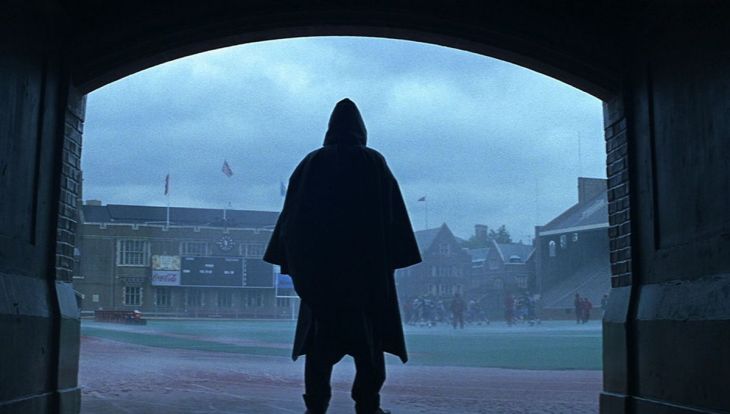
Years before the caped-crusader boom took over Hollywood, Shyamalan proved that not only could superhero movies be taken seriously but could do so without adapting a pre-existing comic. As wonderful as they are and as much as they still provide a fertile ground for movie adaptations, more filmmakers need to take a cue from this movie and stop making nostalgia-filled toy commercials and take a chance on something original. While it may tap into some familiar story beats and tropes, Unbreakable most definitely qualifies as original.
An anomaly within the genre, the film focuses more on the reality of being a super powerful being and not on the punchy punch action. It’s a clever reworking of the Superman mythos in that Superman is a real person but has no idea that they’re Superman. It’s an ingenious deconstruction and reinterpretation of a story we all know so well executed flawlessly. Unlike every other Superman origin story ever told, the revelation that the protagonist has superpowers isn’t a cause for celebration. He doesn’t immediately don a cape and go out and fight crime. Quite the opposite, in fact, it’s a burden.
It’s ruining his marriage and is making his life hell. His son believes in his powers so fervently, that he almost kills him and his wife is trying her hardest to understand the situation. She isn’t a nagging shrew, and although she’s estranged from her husband, she’s tenderly making an effort to repair their marriage. Both the son and the wife react realistically and their performances help ground the movie in reality. They help sell the universe, as does Samuel L Jackson, but in a much different way. He’s the most comic book thing about it and even he is believable. It’s a fantastic performance as is Bruce Willis in the lead role. Since he’s phoned in every performance for the last few years, it’s easy to forget how good an actor he used to be. He, with the help of Shyamalan, makes you believe that superheroes could actually exist.

58. Mary and Max (2009)
If Wes Anderson and Tim Burton had a lovechild who only drank glue and was perpetually glum, that mutant baby might grow up to be Mary and Max. A film so brown, you can smell the cardboard. So bleak, you can hear Elliott Smith weeping in the background. And so heartfelt, it hits harder than a phone call from your childhood self asking why life hurts so much. This isn’t cute claymation, this is claymation with neuroses. Claymation with Asperger’s, alcoholism, depression, anxiety, abandonment issues, agoraphobia, and an unhealthy obsession with Noblets (don’t ask). It’s stop-motion for the emotionally constipated—therapy via puppets. But that’s Adam Elliott’s entire filmography. He makes depressing slice of life portraits that still somehow feel uplifting despite being filled with tragedy.
Mary Daisy Dinkle is a lonely, bullied 8-year-old in 1970s Australia with a birthmark that looks like “poo,” a mother who drinks sherry like it’s oxygen, and a father who stuffs dead birds for fun. She’s the kind of girl who asks too many questions and gets too few hugs. Max Jerry Horovitz is a 44-year-old, obese Jewish atheist with Asperger’s living in New York, whose idea of bliss is eating chocolate hot dogs while watching cartoons in a gray apartment filled with gray objects under a gray sky. He’s like if Travis Bickle didn’t care enough to buy a gun and was too lazy to get involved in politics.
The two become pen pals by pure chance. And what unfolds is one of the most tender, uncomfortable, hilarious, and devastating friendships in cinematic history. Adam Elliot doesn’t tell you how to feel—he dropkicks your heart into a meat grinder and then duct-tapes it back together with melancholy and melted chocolate. Every frame looks like it was sculpted out of anxiety and vintage cigarette smoke. He somehow takes the absurdity of a claymation letter exchange and imbues it with more humanity than most Oscar-bait dramas. This isn’t just a story about loneliness. It’s about being seen—truly seen—for who you are. And about how rare, and holy, that connection can be.

57. Perfect Days (2023)
Wim Wenders’ Perfect Days is a quiet symphony of the everyday, a film that does not rush to its conclusions but instead lingers in the spaces between moments. It is a story that unfolds not through grand events or dramatic confrontations, but through the gentle rhythm of a man’s life, where meaning is found in the simplest of gestures. The film follows Hirayama (Kōji Yakusho), a janitor in Tokyo whose days are meticulously structured yet profoundly poetic. He wakes early, tending to his plants with care, before heading out to clean public toilets—spaces that, under his touch, become near-sacred.
He listens to cassette tapes of classic rock, reads paperbacks, and takes photographs of trees with a cheap film camera. On paper, his life may seem mundane, but Wenders and Yakusho elevate it into something transcendent. Existential films are hit or miss with me. I’m all for simple slice of life films as long as they’re entertaining or if I’m invested in the routine of the main character. Calling this film entertaining would be a stretch. It really doesn’t break from its established rhythm nor does it build to a dramatic third act but nevertheless, I was enthralled.
And that’s due almost exclusively to the main performance by Yakusho. His performance is one of profound internal depth. He does not rely on dialogue but instead conveys everything through the way he moves, the way he pauses, the way his face barely shifts but somehow speaks volumes. There is a history in this man that the film does not spell out for us. We see glimpses—a strained family connection, a past that lingers in the background—but Wenders trusts us to fill in the gaps. He does not force meaning upon us; instead, he invites us to observe. What you get from this film is what you put into it. There’s a whole world living beyond the frame, if you can’t see it, you aren’t paying attention.

56. Spider-Man 2 (2004)
The best superhero films are the ones in which the director’s style is on full display. Burton brought his kooky gothic sensibilities to Batman, Nolan tackled the same character but added his own unique take and Gunn took a band of space misfits no one had heard of before and with his candy colored cartoon aesthetic and quotable dialogue, made them into beloved characters but as successful as those films were, no director has claimed a character quite like Raimi did with Spider-Man.
Keeping all the things fans love about ol’ web head (the nerdy teen, the quipy jokes, the relatable money issues) but injecting it with his distinct gonzo directing style, Raimi made Spider-Man one of the most successful superhero films of the time, and when he was brought on to do the sequel, he doubled down on everything that made the last one great. More pathos, more character drama, bigger set pieces, better action, and a villain that somehow out does Dafoe’s Green Goblin. Spider-Man 2 is no longer the king of the mountain but it held onto that crown for a long time.

55. Love Exposure (2008)
Love Exposure is the Sistine Chapel of pervert cinema. A four-hour sermon on sin, shame, and salvation that makes you laugh, cry, and question whether you’re still sane by the end. It is a movie so bonkers, so demented, so face-meltingly insane that you start questioning if reality has just gone full tilt. Sion Sono, madman poet of Japanese cinema, didn’t make a movie here. He made a 237-minute act of cinematic terrorism. And somehow—it’s beautiful. Let’s get this out of the way: Love Exposure is about a teenage boy who becomes a master of upskirt photography to gain the love of his devout Catholic father. Yes. That sentence is real. And that’s only the starting point. Yu Honda is our plucky, saintly hero. His sin? Being too good. His punishment? His father, a priest consumed by guilt and grief, won’t forgive him unless he confesses to actual sins.
So what’s a boy to do? He finds Jesus in sinning. Specifically: becoming a master of “panty-shot-fu.” (Yes, there’s a training montage.) Somewhere along the way, Yu falls in love with a girl dressed as a boy, gets sucked into a religious cult, cross-dresses as his own alter ego, and finds himself in a showdown with a fanatical psycho nun. The film juggles romance, religion, martial arts, fetishism, and family trauma like it’s the easiest thing in the world. And instead of collapsing under its own weight, it rocket jumps into the sky with both middle fingers pointed at God daring him to smite it and even God is impressed by its “no fucks given” attitude. You’ll never see anything like it again. You probably shouldn’t have seen it in the first place. But God help you, you’re glad you did.

54. Drive My Car (2021)
Drive My Car is three hours of people sitting in cars and saying nothing and everything at the same time. It’s about grief, guilt, art, forgiveness and a red Saab 900 that deserves a Best Supporting Actor nod. Ryusuke Hamaguchi takes Murakami’s short story and stretches it like taffy until it becomes a meditation on everything you never say out loud. It’s slow. Glacial. And if you’re not in the mood, it’ll feel like eating your vegetables but if you’re on its wavelength, It’ll hit like a bullet made of quiet introspection. The film involves a grief stricken recent widowed actor who takes a directing job that requires him to get a chauffeur for insurance reasons. He hires a 20-year-old girl (Misaki Watari) and, despite their age and generational gap, the two eventually develop a special relationship. This is art-house slow-burn griefcore for the emotionally literate. It’s My Dinner With Andre but with a pulse. It’s Driving Miss Daisy but more charming and more emotionally impactful and less problematic. It’s Uncle Vanya but not boring. It’s cinéma vérité but injected with cool. Drive My Car is a three-hour funeral for the parts of us we hide in the glove compartment. A slow drive through trauma, with two of the most likable leads in recent history behind the wheel.
53. Casino Royale (2006)
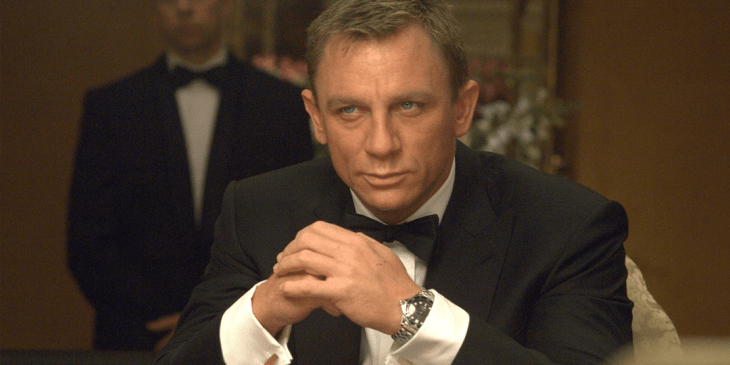
James Bond is a fixture of my childhood, a regular feature on weekend afternoons on cable. I never took any of the Bond movies seriously, and they never really asked me to. (Except for Timothy Dalton, and I never really enjoyed those films.) The suave, debonair, and oh-so British super-spy was a live-action cartoon for me – enjoyable, no doubt, but not something I could ever take seriously. Whatever else you can say about the (admittedly uneven) series of Bond films starring Daniel Craig, they do want you to take 007 seriously. Or at least as seriously as any action movie character. Especially in this, his first outing.
Craig’s version of Bond is rough around the edges, flawed, and almost casually brutal. When he wears a tuxedo, it just feels wrong, like putting a costume on an attack dog. In the effort to return the character to its roots in the Fleming novels, the filmmakers could easily have turned James Bond into an emotionless killing machine, a British reflection of the ’80s American action hero. Luckily, Craig is a much better actor than that and leaves the casual violence with an emotional core. As enjoyable as the film is as a whole, the scene I remember most clearly is the one in which James comforts a shaken Vesper Lynd (Eva Green) in the shower, sitting down in the water fully dressed, his enormous frame dwarfing the shivering woman. Craig made you believe this beast, more charismatic than handsome, had a heart in there somewhere. And made you believe it could be broken.
–Bob Cram

52. Poor Things (2023)
It’s amazing that this movie, which is basically the weirdest, most artistic mash-up of Bride of Frankenstein and Frankenhooker imaginable, is essentially the same story as Barbie. Both films deal with body autonomy and what it means to be a woman. But both go about it in radically different ways. This is Barbie for goth chicks who idolize Mary Shelley and watch hardcore hentai. Which is to say, it’s not for everyone. I saw this in a crowded movie theater packed with elderly people (I saw it early in the day, the only time the old come out), and by the 30-minute mark, half of the theater was empty. And I love that.
In a movie landscape primarily dominated by superhero movies and nostalgic reboots, Yorgos Lanthimos is out here making whatever the fuck he wants and that’s inspiring to me. It gives me hope for the future of cinema. We desperately need more big swings from maverick filmmakers and this is about as big a swing as you could take. Some will dismiss it as just 2 and a half hours of Emma Stone naked and fucking everything in sight but that’s missing the point entirely. This isn’t a Skinemax film. The sexual content isn’t too titillate but to shine a light on the theme of the film. It isn’t about her having sex non-stop, it’s about the fact that she can. This is a world free of prejudices. She has the freedom to find herself and is having a good time doing whatever she wants. The only people who are trying to stop her are the men trying to control her. It’s the kind of film annoying douchebros on the Internet will drag because anything labeled feminist is automatically trash in their eyes and nothing with a ton of sex can possibly be empowering.
Bella’s arc is by far the most interesting of the year. The way she moves about the world, seeing everything anew with child-like wonder. How quickly she learns things about herself, her wants and desires and causes she cares about. Her interactions with the world reminded me of other great “alien” type performances, most notably Daryl Hannah in Splash and Scarlett Johansson in Under the Skin. It’s probably the best work Stone has done and that’s saying a lot. And speaking of career best performances, Ruffalo is incredible as a silver tongue devil who wins her affection with his bravado and then emotionally falls apart when she tires of him.
Watching him regress into a child is the polar opposite arc of hers, and it’s wonderful. Willem Dafoe is also great as the mad scientist who brought her to life. The only reason it’s not higher on the list is that I do think it spins its wheels a bit around the hallway point, with certain themes and scenes getting repeated a bit too much. But those are minor nitpicks. It truly is a masterpiece from a director who just keeps getting better with each new film.

51. The Prestige (2006)
The Prestige is not a film about magic—it IS a magic trick. And not the cutesy rabbit-in-a-hat stuff. A child screams at one point when he realizes the trick—real magic involves bloodshed, which is a subtle foreshadowing of the battle to come. Robert Angier (Hugh Jackman) and Alfred Borden (Christian Bale) are rival magicians in Victorian England, who start out sabotaging each other’s gigs and end up dismantling each other’s lives piece by bloody piece. The feud started when the two were actually friendly. They worked together at one point but after a trick goes wrong, the girlfriend of Angier dies and he blames Borden for it.
Which leads to the wildest revenge in the history of cinema. It’s one of the only Nolan films where emotions hit just as hard as the reveals, which is saying something considering how insane the reveals are. The trick works because of the structure, the twist but more importantly, the performances. Bale is a blunt instrument—gritty, grimy, raw genius wrapped in secrets but terrible showmanship. Jackman is the showman, the face, the ego—the guy who’ll sell his soul if it gets him a louder clap.
And Michael Caine, bless him, plays the Nolan staple of “old British guy who explains everything but still somehow makes it poetic.” Scarlett Johansson exists, mostly to get manipulated and sulk in corsets. But the real co-star? David Bowie as Nikola Tesla, drifting in from another dimension, dressed like a Steampunk Bond villain and casually inventing devices that fracture the laws of God. He’s in maybe three scenes, and they echo louder than most actors’ whole careers. Christopher Nolan, back before he got lost in his own timelines like a cat chasing its own tail, crafted this gothic sleight-of-hand epic about obsession, identity, and the cost of greatness. It’s cold. It’s cruel. It’s clever and it’s the best thing he’s ever made.

50. Enter the Void (2009)
Enter the Void isn’t a movie. It’s an out-of-body, drug-induced, death-trip fever dream projected onto the inside of your skull. It’s what happens when a strobe light develops daddy issues. It’s the cinematic equivalent of being born, shot, reincarnated, and then tossed into a blender full of neon, trauma, and DMT. This is Gaspar Noé’s magnum opus. Equal parts spiritual, nihilistic, visionary, and incredibly horny. It’s not a film you watch so much as experience while your brain begs for an intermission and your soul Googles how to file a restraining order against your eyeballs. The plot, if you squint hard enough through the psychedelic vomit to find one, follows Oscar, a young American drug dealer in Tokyo, who gets gunned down in the first act… and then the movie starts. What follows is a metaphysical acid trip through memory, death, and rebirth—told entirely from a floating, first-person ghost-cam POV that makes Hardcore Henry look like Little Women.
The camera glides, spins, dips, dives, and straight-up leaves the building while Oscar watches his own life unravel in reverse—reliving traumas, witnessing his sister’s descent into exploitation, and peeking in on enough sex to make Freud rise from the grave and say, “Okay, calm down.” Noé doesn’t care about your comfort. He doesn’t care about your bladder. He doesn’t care if you liked the movie. He wants to shove your face into the molten core of the human condition and scream, “EMBRACE THE INSANITY.” Enter the Void is about death, yes—but it’s also about life. Not the clean, narrative-friendly kind of life. The messy, biological, haunted-by-regret kind. It’s about the unbreakable loop of love and guilt, of family and fate, of spiritual yearning buried under layers of neon drenched phantasmagoria.

49. Anora (2024)
Sean Baker has a gift for finding beauty in the margins, for taking lives that Hollywood often renders as caricature and illuminating them with empathy, humor, and an unsentimental honesty. In Anora, he continues his streak of humanistic storytelling, crafting a film that’s raw, electric, and profoundly moving. As with The Florida Project and Red Rocket, Baker’s approach is one of near-documentary realism, capturing the textures of Anora’s world with an almost voyeuristic immediacy. The film follows Anora (Mikey Madison), a young Brooklyn stripper who suddenly finds herself at the heart of a whirlwind romance with the son of a wealthy Russian oligarch. As good as the story is, the film belongs to Madison. Her performance is nothing short of revelatory.
The way she moves through Baker’s frame, with a mix of street-smart bravado and underlying vulnerability, is equal parts movie star levels of confidence and character actor subtlety. We’ve seen characters like Anora before, but rarely with this level of nuance. She’s a deep well of sadness that often has to resort to screaming and fighting in order to hold onto the last bit of happiness she has left. What makes Anora so gripping is its unpredictable structure. What begins as a seemingly Cinderella-like tale soon morphs into something closer in tone to Chan is Missing.
The middle section is a full-on comedy where she’s forced to team up with the most inept henchman in the world in order to find her missing husband. It’s a wonderful digression that inevitably turns back to reality. Baker isn’t interested in fairy-tale endings. His characters live in a world where every choice has consequences, where love is complicated by power dynamics, economic desperation, and the weight of societal expectations. There are hardly any happy endings in his worlds because life doesn’t work like that. Life is nothing but lessons that either help us or leave scars. Anora is the latter.

48. Fantastic Mr. Fox (2009)
Based on Roald Dahl’s wildly popular children’s book, Wes Anderson’s sole attempt at directing an animated film still feels completely Wes Anderson. That can be a good or bad thing, depending on how you feel about the eccentric director. For me, this is the best film in his entire catalog. The story follows Mr. Fox, a family man who goes back to his ways of stealing, unable to resist his animal instincts. It’s told in a whimsical yet relatable way and it’s a film that old and young can both enjoy equally, even though the story will have different meanings to each age group. The stop motion animation looks great and the A-list cast (George Clooney, Meryl Streep, Jason Schwartzman, Bill Murray, Willem Dafoe, and Owen Wilson) make it a memorable experience all around.
–Lee McCutcheon

47. Jiro Dreams of Sushi (2011)
Endlessly entertaining, thoroughly engaging and totally delightful, Jiro Dreams of Sushi is the simple story about a man and his passion for sushi. Passion may not be a strong enough word. Nor is obsession. In fact, there is no word to adequately describe Jiro’s fixation with the food. You see, for the last 70 or so years, Jiro has dedicated every minute of his waking life to the pursuit of mastery. The mastery of Sushi. Through decades of extreme hard work, strict perfectionism and a drive to be the best, Jiro has become the world’s greatest sushi maker. He has no other passions, no other drives.
Everything else in his life, including his own sons, takes a backseat to sushi. His profession is his entire being. He’s so devoted to his craft, that he only takes one day off of work a year. He didn’t even take a day off when he received an award from the President of the United States. It’s a compelling study of a man who built a legacy out of perfectionism and the two sons who are cursed to live in his shadow. His demeanor may be cold and his parenting a bit controversial but there’s no denying the skill. Whether you end up liking him or not, it’s hard not to be inspired by his work ethic.

46. Barbie (2023)
Who could’ve predicted that a movie about a plastic doll would be the most controversial and divisive of the year? Odds are you fall into one of two categories: 1) you love it for its bubblegum aesthetic, humor, and message or 2) you felt it was too preachy and it hates men. It’s not one or the other but it does feel like the most passionate about it fall into either of these categories. And I simply do not get the people in the first category. I understand if you simply don’t like it but to say it’s trash because it’s too preachy or that it hates men, is insane to me. That’s overlooking every other element of the film and just focusing on the two things you dislike about it. It’s also missing the fucking point by a county mile.
I can’t say whether it’s too preachy or not because that’s a matter of opinion and you think it is, fair enough but to say it hates men is patently false. It satirizes specific types of men. The incompetent man, the asshole, the douchebag, and the man-child. If it hated men, every man in it would be awful and Alan (Michael Cera) is clearly an ally. Why? Because he doesn’t view women as conquests, prizes, or objects. I truly feel like the people who think this movie is anti-man have said the phrase “not all men” in response to any woman’s encounter with a terrible dude.
If they want to dismiss this movie for ridiculous reasons, I ain’t gonna waste any more time trying to convince them otherwise. I have better things to do with my life… like rewatching this movie for the umpteenth time. Because every time I do, I like it just a bit more. The things that stand out the most to me besides the writing and direction (which are a given considering everyone won’t shut up about Gerwig not getting a nom), is the art direction (it’s the most visually arresting film since The Umbrellas of Cherbourg), the performances (everyone brings their A-game but Gosling steals the show), the catchy songs, the staged musical and battle moments and the humor. Basically, everything. There’s not a single element that doesn’t work for me. I think Gerwig and Robbie really did the impossible here. They made what is essentially an expensive toy commercial into a work of art.

45. Long Day’s Journey into Night (2018)
Long Day’s Journey Into Night is what happens when cinema stops giving a damn about logic, plot, or your precious attention span and starts whispering poetry into your ear while slowly drowning you in dream syrup. It’s structured like a half-remembered memory in slow motion, a melancholic hallucination designed to put the viewer into a trance. It may share the same name as a Eugene O’Neill play, but the two couldn’t be more different. This is fever-dream noir, where time folds like origami, memory collapses in on itself, and everyone talks like they’re remembering something from a past life they’re still in love with.
The film follows Luo Hongwu (Huang Jue), a chain-smoking, memory-haunted sadboy who returns to his hometown in search of a lost woman—Wan Qiwen (Tang Wei), a femme fatale who might be real, might be a ghost, might be a metaphor, might be the echo of a dream whispered in Mandarin under the flicker of a dying streetlight. He’s not so much solving a mystery as drowning in one. The first half of the film is moody, nonlinear noir-porn. Voiceovers float like cigarette smoke and walls whisper secrets. It’s like getting drunk in an abandoned arthouse.
But just when you think you’re deep enough into this fog of half-remembered trauma, Bi Gan drops the flex of the decade: A 59-minute, unbroken, 3D, one-shot dream sequence that plays like Inception’s poetic, chain-smoking cousin. No cuts. No cheats. Just one long, hypnotic descent into subconscious yearning. It’s a flex so hard, Tarkovsky’s ghost stood up and slow clapped. It’s not just technical wizardry. It’s a spiritual out-of-body experience masquerading as a tracking shot. You’re no longer watching the film—you are the film. You’re inside the dream. Floating. Sliding. Trying to catch fireflies made of memory. It’s one of the best moments in film history and in order to experience it, you have to be patient and be willing to give yourself over to the vibe.

44. John Wick (2014)
The film’s plot — a mythical hitman coming out of retirement to get revenge on those responsible for killing his dog — could also be, in some way used to describe its star. Before this film came out, Keanu Reeves was primarily known as either the “I know kung fu” guy from The Matrix trilogy or as the lovable idiot from the two Bill and Ted movies but he was never thought of as a good actor and certainly was never considered a badass. But just like Wick himself, Reeves came out of nowhere to surprise everyone and to finally kill his haters once in for all.
John Wick is the definition of a surprise hit. There was absolutely no buzz going into this film and hardly anyone was excited. The trailer looked cool but the fact that it starred Reeves (who as previously established wasn’t a name anyone gave a shit about) and was directed by his stunt man, didn’t inspire that much confidence. But it far exceeded everyone’s expectations. The film, like Taken before it, hit at the exact right moment. The world needed another badass and the film delivered. It, along with its two follow ups, are pleasant surprises that rank among the best of the action genre.

43. Spider-Man: Into the Spider-Verse (2018)
If I only had one superhero film to show to Scorsese to convince them that the genre can produce “cinema”, it would be this one. Like he said, the genre is pretty much nothing but a cinematic theme park, cranking out new attractions but offering very little substance. As exciting as the best ones are, it’s hard to argue that many of them are more than just cotton candy but there are exceptions. While I think the Dark Knight is still the pinnacle, in order for Marty to truly appreciate it, he would have to see Batman Begins and he ain’t seeing two superhero films, so my pick would be the second greatest superhero film.
Acting as a much needed adrenaline shot to a stagnant genre, Into the Spider-Verse is the freshest superhero origin story in a long time. Miles Morales’ story isn’t built on tragedy (he isn’t an orphan), it isn’t dark and gritty and it super serious. He’s just a kid who happens to get super powers and then tries to deal with them. In the time of grimdark uber serious extreme reboots, It’s refreshing to see a film remember that this shit is supposed to be fun. It’s a film that reminds everyone why they tied capes around their necks when they were younger: because being a superhero is fun and everyone can be one.

42. Godzilla Minus One (2023)
Despite producing a colossal 38 films (including three animated ones), it’s shocking how few of them are outright bad. The vast majority of them are interchangeable in a ranking since most of them are good but the ones that really stick out are the laughably bad ones (the ’98 Godzilla) or the general consensus masterpieces (the ’54 Godzilla). It’s a remarkably consistent franchise that is now split between the Japanese-produced ones and the American ones. We have our own Monsterverse that’s essentially the MCU with Kaijus punching each other that’s entertaining for what it is but they pale in comparison to the last two Japanese ones.
Shin Godzilla shocked everyone by how good it was and then they outdid themselves a couple of years later with what is now considered the second best or even the best Godzilla movie ever made. Godzilla Minus One isn’t just a good monster movie. It’s a good movie, period. The story is gripping with memorable characters and has a perfect mixture of action and drama. Western studios take note, this is how you make an epic without breaking the bank.

41. 1917 (2019)
Mendes must’ve seen the single take shot in Atonement—which for those of you that don’t know, was a long scene set on the beaches of Dunkirk—and thought to himself “I can do that but better.” It only took him 12 years but he finally made Joe Wright hold his beer. 1917 is Mendes’ most purely ambitious and passionate picture to date. Not since Mad Max: Fury Road as a film perfectly embodied the textbook definition of the idea of ‘pure cinema.’ Anyone watching this can easily understand the plot, regardless of their age or language. It uses as little words as possible to convey its message.
Since they were basically making a silent film, the director, along with the God King Deakins, meticulously labored over every shot to make sure that every scene was not only gorgeous but filled with as much visual information as possible. You could watch this on mute and understand what it is they need to do and how dangerous each area they encounter is. In addition to its tremendous wordless storytelling, the film was also designed as one continuous shot, which puts you in the characters shoes. With every step they take, you can feel the ticking clock of dread looming over their heads. It never came off as a gimmick to me but as a tool in which to help fully immerse me into this war. 1917 is an expertly crafted and emotionally exhausting thrill-ride behind enemy lines that’s equal parts beautiful and technically flawless.
80-61 | 40-21
Were you surprised by which movies made (or didn’t make) The New York Times’ list? Do you agree with my selection of picks so far? Let us know in the comments below!
